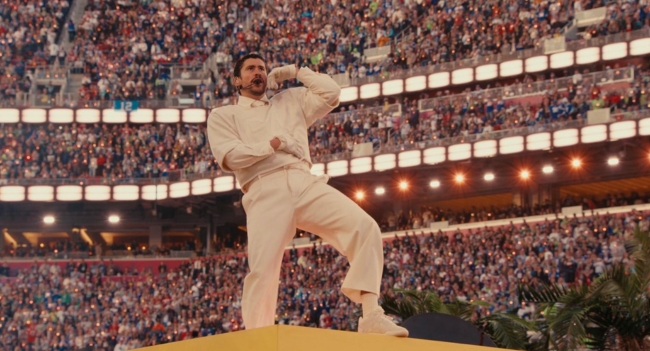
Bad Bunny’s Super Bowl LX halftime show takes home seven Emmys

Bad Bunny’s Super Bowl LX halftime show has turned one of the year’s biggest cultural flashpoints into an emphatic awards-season success.
The Apple Music Super Bowl LX Halftime Show Starring Bad Bunny won seven Emmys at the 2026 Creative Arts Emmy Awards, sweeping every category in which it was nominated. The victories covered the full range of the production, from music and choreography to sound, lighting, camera work and directing.
The show won for Outstanding Variety Special (Live), Outstanding Music Direction, Outstanding Directing for a Variety Special, Outstanding Choreography for Variety or Reality Programming, Outstanding Sound Mixing for a Variety Series or Special, Outstanding Lighting Design/Lighting Direction for a Special, and Outstanding Technical Direction and Camerawork for a Special.
For Bad Bunny, the haul included his first Emmy. Jay-Z, who served as an executive producer on the halftime show, collected his third Emmy.
A record-setting night for the halftime show
The seven wins made Bad Bunny’s performance the most-awarded Super Bowl halftime show in Emmy history. The recognition came several months after the February 8 performance at Levi’s Stadium in Santa Clara, California, which drew 128.2 million domestic viewers.
The show also generated an enormous worldwide audience, with Roc Nation reporting 4.157 billion views across global broadcast, YouTube and social platforms during the first 24 hours.
The Television Academy’s recognition extended well beyond Bad Bunny himself. Miguel Gandelman won for music direction, while Hamish Hamilton received the directing award. The Academy also honored the production teams responsible for its choreography, sound, lighting and technical execution.
The performance featured appearances from Lady Gaga and Ricky Martin, among others, and incorporated elaborate staging and choreography into the live broadcast.

The performance became a political flashpoint
The scale of the audience did not prevent Bad Bunny’s selection from becoming a source of controversy in the United States.
A significant part of the backlash centered on the fact that Bad Bunny is Puerto Rican and performed primarily in Spanish. Critics questioned whether a Spanish-language performance belonged on one of the most prominent stages in American television.
That reaction eventually helped inspire a competing halftime production from Turning Point USA. The group staged what it promoted as a family-friendly alternative on the same night, with Kid Rock joined by a lineup of country performers.
The alternative show did not receive any Emmy recognition.
Meanwhile, many critics praised Bad Bunny’s halftime performance for its themes of unity and inclusion. Supporters saw those themes as particularly notable at a time when such ideas have become increasingly contentious in American politics. Other criticism focused on the performance’s content, with some complaints reflecting claims about the show that were disputed or simply incorrect.

More than 2,000 FCC complaints
Some viewers took their objections to the Federal Communications Commission, which accepts complaints about television broadcasts.
In May, TMZ reported that it had obtained more than 2,000 complaints filed with the FCC following Super Bowl LX. More than 100 specifically targeted Bad Bunny’s performance, with viewers describing it as inappropriate for network television.
The complaints covered a wide range of objections. Some accused the songs of being vulgar, even though Bad Bunny performed radio edits of tracks including Safaera and Tití Me Preguntó. Others alleged that he used slurs against white people, objected to the choreography as overly sexual, or characterized the performance as political theater.
Some complaints went further, arguing that performing in Spanish was inherently un-American or disrespectful to veterans.
The sheer variety of those complaints made it difficult to distinguish genuine objections from trolling. TMZ’s reporting showed that many of the submissions focused on specific aspects of the performance, while others objected to the broader cultural and political message they believed the show represented.

The FCC found no violations
The controversy also reached Republican politicians, who called for scrutiny of the halftime performance.
The FCC ultimately investigated the complaints surrounding Bad Bunny’s show and found no violations.
The Television Academy reached a very different conclusion.
Rather than finding seven reasons to object to the performance, Emmy voters found seven reasons to reward it. The show swept all seven of its nominated categories, giving Bad Bunny his first Emmy and establishing his Super Bowl performance as the most decorated halftime show in Emmy history.