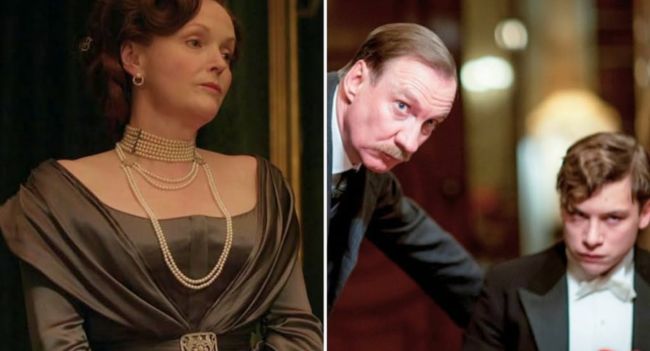
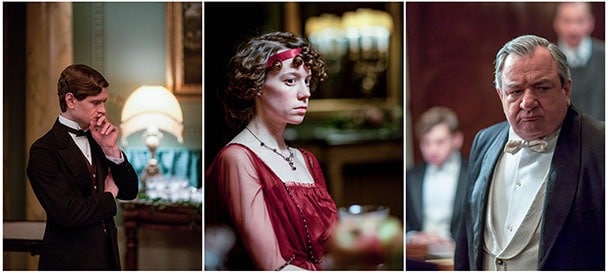
What happens when a play written about Britain in 1912 suddenly feels as though it could have been written for the world we live in today? That is the remarkable effect of the BBC’s adaptation of An Inspector Calls, where JB Priestley’s warning about social responsibility and our obligations to one another still lands with striking force.
And then, on the same night, This Is England ’90 offered something completely different: a return to a group of familiar characters whose lives, friendships and struggles have been unfolding across decades of British history.
Both dramas look backward. Yet neither feels trapped in the past.
An Inspector Calls Still Has Something to Say
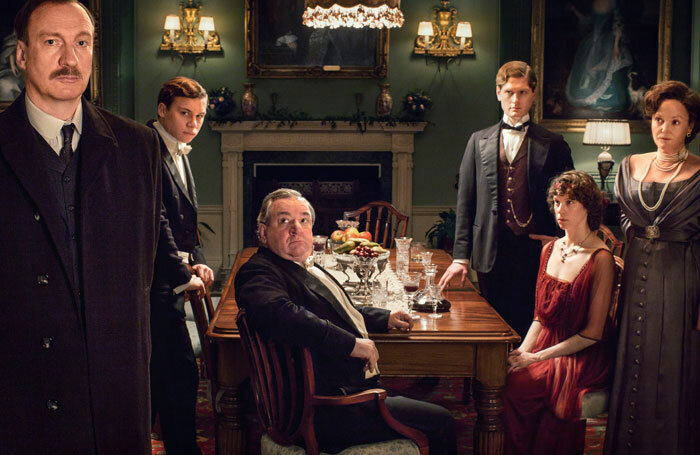
The most striking part of An Inspector Calls comes during Inspector Goole’s final speech.
Replace Eva Smith, the young woman whose death lies at the centre of Priestley’s story, with Alan Kurdi, the three-year-old Syrian boy whose drowning shocked the world, and Goole’s words about shared responsibility suddenly take on an unsettling contemporary meaning.
His argument is simple but profound: human lives are connected, and what happens to one person cannot always be separated from the lives of everyone else.
That idea lies at the heart of Priestley’s play. Although the story is set in 1912, its concerns about social responsibility, inequality and shared humanity remain remarkably relevant.
The production, sensitively adapted by Helen Edmundson, succeeds in turning a play written more than a century ago into gripping 21st-century television. It is difficult to understand why the work fell out of favour during the 1950s and 1960s, when it was dismissed by some as bourgeois theatre and became associated with amateur and regional productions.
Priestley’s political ideas are hardly hidden. More importantly, the wealthy middle-class family at the centre of the story is hardly presented in a flattering light.
The Birlings Become the Targets
The Birling family are supposed to represent security, wealth and social respectability. Instead, they become the clearest demonstration of everything Priestley wants his audience to question.
Ken Stott’s Arthur Birling and Miranda Richardson’s Sybil Birling are particularly effective as the complacent heads of the household.
Arthur is the sort of man who believes that people should concentrate on their own affairs rather than worry about strangers. His attitude is made clear when he tells Gerald, the man who may eventually become his son-in-law, to keep his head down and mind his own business.
For Birling, the idea that society has a collective responsibility is almost absurd.
He mocks the language of community, complaining about the suggestion that everyone should have to look after everyone else, comparing society to bees living together in a hive.
It is an attitude that feels remarkably familiar.
The individualism of Birling’s worldview echoes political arguments that would become particularly associated with Margaret Thatcher decades later: the belief that people should largely fend for themselves and that society should not be treated as one collective responsibility.
That makes Priestley’s dialogue feel surprisingly contemporary rather than like the voice of a distant era.
David Thewlis Takes Command

Yet for all the strength of the Birling family, it is David Thewlis as Inspector Goole who ultimately dominates the production.
His inspector is calm, restrained and difficult to read. He does not need grand gestures to control the room. His presence alone is enough to unsettle the family and force them to confront what they would rather avoid.
He also captivates Sheila Birling, the younger member of the family who proves considerably more receptive to the inspector’s moral argument than her parents.
The mystery surrounding Goole adds another layer to the story. He arrives, questions the family, reveals uncomfortable truths and then disappears, leaving behind the sense that he may have been something more than an ordinary police inspector.
That element of Priestley’s play is harder to accept literally today. Goole can appear like an angel, a prophet or a messenger of impending disaster. His warnings extend beyond Eva Smith’s fate to the possibility of a coming world war.
But even that theatrical device has a purpose.

Before leaving the Birlings, Goole warns that if humanity refuses to learn the lesson that people are responsible for one another, it will eventually be forced to learn through “fire, and blood, and anguish.”
After the events of recent decades, that warning can still feel uncomfortably close.
From 1912 to 1990
Then came another drama rooted in Britain’s past, but one with an entirely different tone.
Shane Meadows’s This Is England ’90 returned to the lives of Shaun, Woody, Lol, Milky, Gadget and the rest of the group on Channel 4.
Set in 1990, the final series arrives at a moment when Britain was undergoing enormous change.
The opening immediately places viewers inside the era, evoking Strangeways, riots, the poll tax, the end of Margaret Thatcher’s time as prime minister, Gazza, the Gulf War, mad cow disease and the rise of Madchester.
The soundtrack and imagery are just as important, with Bez appearing in the opening montage before The La’s “There She Goes” sets the tone.
After the darker events of the earlier instalments, this opening episode is surprisingly upbeat.
For a while, the characters are simply allowed to exist together again.

School Dinners and Nostalgia
Gadget, Milky and Shaun are back at school, although education is hardly their priority.
Instead, they are there because Lol is now working as a dinner lady and the group has discovered an opportunity to enjoy a free school meal.
Gadget insists that the attraction is not really the fact that the food costs nothing. For him, it is about nostalgia.
And that is exactly what the episode captures.
There is something wonderfully familiar about returning to a school dinner room, remembering childhood food and watching characters who have grown older but still carry so much of their past with them.
The result is nostalgia layered upon nostalgia.
A Rarely Upbeat Beginning
The first episode of the four-part series is notably lighter than much of what came before.
It is also extremely funny.
Some of the strongest moments involve Woody and his parents, particularly a split-screen telephone conversation, while Higgy and Flip provide another source of comedy.
Even the confrontation towards the end of the episode manages to retain a playful quality.
But beneath the optimism is the knowledge that this world will not remain happy forever.
The earlier series have already established how quickly these friendships and relationships can move from warmth and humour into pain. The sense that darker moments are waiting somewhere ahead gives even the funniest scenes a faint shadow.
Why This Is England Feels So Real
Perhaps the greatest strength of This Is England ’90 is how authentic it feels.
The characters do not behave like carefully constructed television figures. Their conversations, awkward pauses, jokes and arguments resemble the rhythms of people who have known each other for years.
The performances are central to that effect, but so is the extraordinary attention to detail.
Shane Meadows has spent years following these characters, beginning with the original This Is England film and continuing through the television series set in 1986 and 1988. By the time the story reaches 1990, the audience has accumulated years of history with them.
The actors themselves had also grown alongside their characters. The original film was set in 1983 and filmed in 2006, while the same central group later returned for the television instalments. Meadows described ’90 as the final chapter of the story, completing a journey that had followed the characters through different stages of British life.
That history is what makes the reunion so effective.
Watching Shaun, Woody, Lol, Milky and the others again can feel less like starting a new television drama and more like unexpectedly meeting old friends after years apart.
They may not always be easy friends.
They have made mistakes. They have hurt one another. Their lives have taken complicated turns.
But shared history has given them a bond that remains difficult to break.
Two Dramas About Connection
In completely different ways, both An Inspector Calls and This Is England ’90 are ultimately interested in human connection.
Priestley’s play asks whether people can ignore the lives of others and pretend that individual actions have no consequences.
Meadows’s drama approaches the subject from the opposite direction, showing what happens when people have spent years growing up together and carrying their shared history with them.
One story is set in 1912. The other looks back at 1990.
Yet both demonstrate why period drama can remain powerful long after the period itself has disappeared.
An Inspector Calls turns Priestley’s century-old warning about responsibility into something that still feels urgent. This Is England ’90, meanwhile, turns memories of a recent Britain into something intimate and deeply personal.
One leaves you thinking about society.
The other leaves you thinking about friendship.
Both leave the past feeling much closer than you might expect.