How Craig Morgan Turned a Song About His Late Son Into an Unlikely iTunes No. 1


For Craig Morgan, “The Father, My Son and the Holy Ghost” began as something deeply private: a song written in tears before sunrise, years after the death of his 19-year-old son, Jerry.
He had no plans to release it. He wrote it for himself, his wife Karen and their three other children. Then his band heard it. They urged him to perform it. Ricky Skaggs heard it at the Grand Ole Opry and told Morgan the song needed to be heard.
Within months, that deeply personal act of grief had become an unlikely country-music phenomenon. And when Blake Shelton began urging his millions of social-media followers to support the song in September 2019, Morgan watched it climb from outside the top 70 on iTunes’ country chart to No. 1. It also reached No. 1 on the all-genre iTunes Top Songs chart.
Morgan was ready to walk away
The road to that moment began in 2016, when Morgan’s life changed forever.
That summer, his 19-year-old son Jerry drowned in a tubing accident on a lake near the Tennessee-Kentucky border. Morgan kept working and continued touring, but performing no longer felt the way it once had.
He found himself struggling to summon the energy to be fully present onstage. There were nights when he wondered whether he should continue in the music business at all.
For years, Morgan had measured his career partly by whether he remained relevant. Now, at 55, he was facing another difficult reality: his last major country hit, “Wake Up Lovin’ You,” had arrived in 2013, while the mainstream country landscape was increasingly dominated by younger artists, party-oriented songs and hip-hop influences.
The loss of his son made that career uncertainty even harder to ignore.
A song arrived in the middle of the night
Early in 2019, Morgan woke around 3:30 in the morning with a title and chorus already forming in his head: “The Father, My Son and the Holy Ghost.”
He was afraid he would forget it if he went back to sleep.
So, while Karen remained in bed, Morgan got up and began writing. Four hours later, as daylight arrived, he had finished a song unlike anything he had previously released.
He described the writing session as an emotional outpouring, crying as he worked. The song drew on the spiritual side of Morgan’s catalog, recalling the faith-centered “That’s What I Love About Sunday” from 2004 rather than the carefree spirit of songs such as “Redneck Yacht Club” and “Bonfire.”
The track would eventually become Morgan’s first new music since 2016. It was released on August 30, 2019.


From a family song to the Grand Ole Opry
Morgan initially had no intention of sharing the song beyond his family.
That changed when he played it for his band. Their reaction persuaded him to take the next step and perform it publicly.
He debuted “The Father, My Son and the Holy Ghost” at a show in Colorado. Later, he brought the song to the Grand Ole Opry in July.
The performance was overwhelming for Morgan. He walked offstage in tears and questioned whether he could ever sing the song in front of an audience again.
Then Ricky Skaggs approached him.
Skaggs put his hands on Morgan’s shoulders and told him that he had to keep singing the song because the world needed to hear it.
That encouragement mattered. What Morgan had initially viewed as a private expression of grief was becoming something other people could connect with.
Blake Shelton steps in
The song’s biggest unexpected boost came from Morgan’s longtime friend and fellow Opry member, Blake Shelton.
By September, Shelton began using Twitter to rally his followers behind the song. His campaign quickly became a running countdown as Morgan’s track climbed the iTunes country chart.
On September 9, the song was sitting at No. 75 on the iTunes Country Songs chart. Over the following days, Shelton repeatedly urged people to listen, share the song and encourage others to support it.
The response was extraordinary. By September 10, the song had moved rapidly up the rankings. It reached No. 18, then No. 15, and eventually entered the top 10. By September 11, it was No. 9 and then No. 5.
The following day, Morgan had his No. 1.
“The Father, My Son and the Holy Ghost” topped both the iTunes Country Songs chart and the all-genre iTunes Top Songs chart.
Shelton was far from the only celebrity to join the campaign. Luke Combs, Ellen DeGeneres, Carson Daly, Kelly Clarkson, Gwen Stefani, Cole Swindell, Charles Esten, Larry the Cable Guy, Angie Harmon and others helped spread the song.
An unlikely hit built on grief and faith
The success was striking because Morgan had spent the previous several years wondering whether his place in country music was disappearing.
Instead, his most personal song became his most talked-about release in years.
Morgan wrote and produced the track himself, making it a particularly direct expression of his experience after Jerry’s death. The song was mournful but also rooted in faith, reflecting the way Morgan was trying to live with his loss rather than simply recounting it.
When the song reached No. 1, Morgan wasn’t suddenly a young artist chasing a changing country-music trend. He was a veteran performer sharing something intensely personal that he had never expected to become a commercial success.
The song’s release also marked Morgan’s reunion with Broken Bow Records, his former label home for more than six years. At the time, the track was his first new music since 2016.
The song kept gaining momentum
The iTunes breakthrough proved to be more than a brief social-media moment.
By October, “The Father, My Son and the Holy Ghost” had been added by 23 country radio stations, making it the fourth-most-added song at country radio that week. It was also receiving support from Music Choice and SiriusXM.
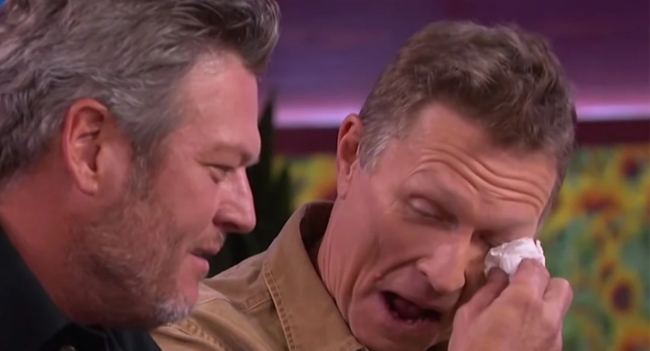
Morgan later performed the song on The Kelly Clarkson Show, and it returned to No. 1 on the iTunes all-genre chart after that appearance.
But the numbers only tell part of the story.
The song began with a father sitting alone in the early hours of the morning, trying to capture words before they disappeared. Morgan had been unsure whether he could keep performing, unsure whether he still belonged in country music and unsure whether anyone outside his family would ever hear the song.
Instead, “The Father, My Son and the Holy Ghost” became a career-defining moment.
What started as a private expression of grief ultimately reached the top of the charts with help from a friend, fellow artists and thousands of listeners who chose to pass it along. For Morgan, the song’s unexpected success gave new meaning to a piece of music he had originally written simply because he needed to get the words out.