Céline Dion review: an emotional, triumphant return to the Paris stage
After six years away from full-length live performance, Céline Dion returned to the stage in Nanterre on Saturday night. There were tears, enormous vocal moments, theatrical surprises and, most importantly, the unmistakable feeling that she had made it back.
For Céline Dion, the first song of her Paris comeback carried an extraordinary weight.
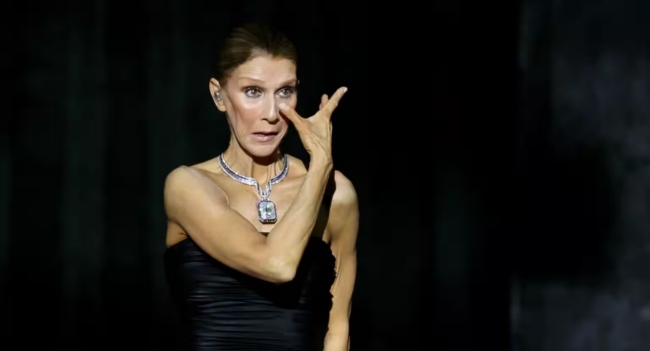
She walked onto the stage at the Plenitude Arena in Nanterre on 12 September and began with On ne change pas. Within moments, emotion overwhelmed her. Dion struggled through part of the second verse, her voice breaking as she wiped away tears.
Then the music moved into Destin, and the mood changed. The sadness gave way to joy.
“I made a promise to be back on stage. Singing for you. Singing for me,” Dion told the audience. “Singing for life.”
After six years without a full-length concert, the 58-year-old singer was finally doing exactly what she had promised.
The return comes after one of the most difficult periods of her career. In 2022, Dion revealed that she had been diagnosed with stiff person syndrome, or SPS, a rare neurological disorder that causes severe muscle stiffness and spasms. The condition became so debilitating that she was unable to perform and, at one point, experienced spasms strong enough to cause broken ribs.
Her 2024 documentary, I Am: Céline Dion, offered an unusually intimate look at how profoundly the illness had affected her body and her voice.
Yet Dion remained determined to return.
“If I can’t run, I’ll walk. If I can’t walk, I’ll crawl,” she said in the film. “But I won’t stop.”
On Saturday night, there was no need to crawl.

A voice changed by illness, but far from diminished
The physical demands of the concert are clearly different from those of Dion’s earlier performances. Some of her best-known songs, including Because You Loved Me, The Power of Love and My Heart Will Go On, have been transposed into lower keys.
Given what SPS has done to her voice, the adjustment is understandable. At times, however, the lower arrangements take away some of the extravagant melodrama that made songs such as Because You Loved Me and It’s All Coming Back To Me Now so powerful.
That does not mean Dion’s voice has lost its force.
When the arrangement demands it, she can still summon the kind of note that has defined her career. Tout l’or des hommes becomes one of those moments, with Dion driving into the song and belting with unmistakable authority.
There is also a new richness in the lower part of her voice.
The recently released ballad Dansons allows her to settle into a deeper register, while Courage, recorded after the death of her husband, René Angélil, is particularly moving. Dion lets the voice become fragile and raspy, allowing vulnerability to carry the song rather than overpowering it.
That vulnerability becomes part of the concert’s emotional power. Reuters reported that Dion was visibly overwhelmed during the opening number, at one point inviting the audience to help her through the song. She later told the crowd that the tears were tears of joy.
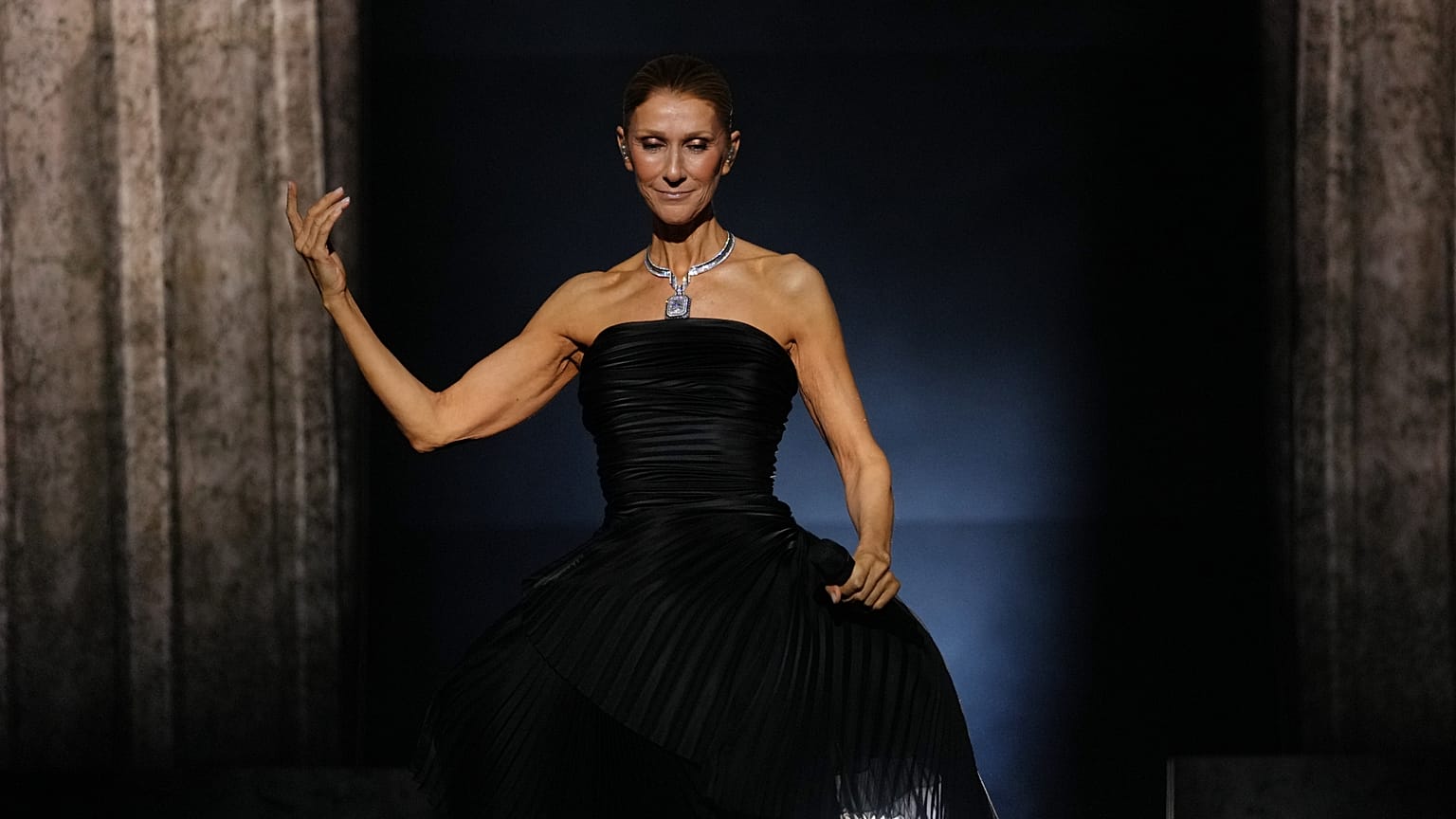
The staging is comparatively restrained, with Dion spending much of the evening in black gowns. That simplicity leaves the focus where it belongs: on the singer, her voice and the significance of being back in front of a full audience.
A crowd that knows exactly why it came
More than 200m records have been sold by Dion, making her the third most successful female artist of all time according to the figures cited around her career. For some listeners, that level of success has always been difficult to understand. Her music can be dismissed as the ultimate expression of polished, sentimental adult contemporary pop.
There is little evidence of that skepticism inside the Plenitude Arena.
The 30,000-plus audience has come for exactly what a Céline Dion concert promises: the huge songs, the huge voice and the unabashed emotion.
Beauty and the Beast turns out to be one of the night’s unexpected highlights.
Dion also refuses to let the evening become an uninterrupted procession of power ballads. A lively sequence of J’irai où tu iras, Ne bouge pas and Dans un autre monde gives the show a burst of movement. She struts across the stage, performs vocal flourishes and even indulges in some mock boxing with a backing singer.
Then things become considerably more extravagant.

Disco, camp and a little opera
The concert suddenly veers into disco territory, with Dion performing covers of Donna Summer’s I Feel Love and Sweet Dreams (Are Made of This). A chandelier descends before transforming into a glitter ball, while a heavily electronic version of That’s The Way It Is keeps the sequence moving.
As she shimmies around the stage, Dion flashes a knowing smile.
It is the sort of moment that could easily become too much. Instead, her willingness to embrace the absurdity makes it work. She seems fully aware of how wonderfully over-the-top the spectacle is.
The most outrageous sequence arrives with Ebben? Ne andrò lontana from Alfredo Catalani’s opera La Wally.
Wearing a pink feathered coat, Dion stands on a rocky platform that has risen from beneath the stage. She performs the aria as fake snow falls over the audience, creating a scene that is simultaneously grand, eccentric and completely theatrical.
It is a tribute to Maria Callas filtered through the very particular sensibility of Céline Dion. Opera purists may well recoil. Everyone else can simply enjoy the spectacle for what it is: brilliant, ridiculous and unmistakably Dion.

When the audience takes over
The strongest audience reaction comes during Pour que tu m’aimes encore.
Many of those packed into the arena have spent the week celebrating Dion’s music at mass karaoke events around Paris, and they arrive ready to sing. When the song begins, the audience becomes so loud that it nearly overwhelms Dion herself.
It is an extraordinary reminder of the connection between the singer and her fans.
Paris has been preparing for her return with unusual enthusiasm. Crowds gathered outside her hotel hoping for a glimpse of the star, while her comeback residency became one of the city’s major musical events. Reuters described the atmosphere around her return as a frenzy, with fans waiting late into the night.
The Plenitude Arena’s official programme lists 16 concerts for the 2026 run, beginning on 12 September and continuing through 17 October, with further performances scheduled in 2027.
But for the audience on opening night, the number of shows matters less than the fact that Dion was finally standing in front of them again.

All By Myself becomes the defining moment
If Pour que tu m’aimes encore belongs to the audience, All By Myself feels like it belongs to Dion.
As the piano and slide guitar build, she looks upward. Then comes the final chorus.
Dion lets go.
The familiar high notes arrive, and when she reaches them, her expression changes. First there is relief. Then comes something closer to triumph.
That reaction is perhaps the clearest measure of what this night means.
For years, the question was whether Céline Dion would ever be able to perform a full concert again. Her illness had made even the basic mechanics of singing uncertain. The possibility of returning to the stage seemed far from guaranteed.
Now she has done it.
The performance is not an attempt to pretend that nothing has changed. Her arrangements have changed. Her voice carries different textures. The physical demands of the show have been carefully considered.
What remains is the instinct to perform, the ability to command an arena and the extraordinary emotional bond between Dion and the people who have waited for her.
She arrived in Paris after a long and difficult road. She left the stage having delivered something much more meaningful than a routine comeback concert.
Céline Dion had kept her promise.