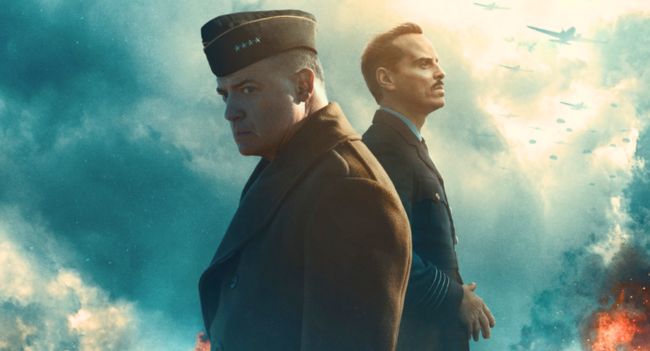
Andrew Scott’s New War Drama Turns The Weather Into A Matter Of Life And Death
Before the beaches of Normandy became the scene of one of the most consequential battles in history, the fate of D-Day hinged on something far less visible — the weather.
Anthony Maras’ new war drama Pressure brings that extraordinary true story to the screen, focusing on the little-known meteorologist whose forecast helped determine when the Allied invasion would begin.
The film even closes with a remarkable exchange attributed to John F. Kennedy and departing US president Dwight D. Eisenhower.
On Kennedy’s inauguration day in 1961, he reportedly asked Eisenhower what had given the Allies such a crucial advantage over Nazi Germany during D-Day.
Eisenhower’s answer was simple: “We had better meteorologists than the Germans.”
That line perfectly captures what makes Pressure so compelling.

The 72 Hours That Could Change Everything
The story begins in June 1944, just 72 hours before the planned Allied invasion of Normandy.
Captain James Stagg, played by Andrew Scott, is pulled away from his heavily pregnant wife in London and summoned to Eisenhower’s headquarters at Southwick House in Hampshire.
His responsibility is enormous.
He must determine whether the weather will allow the invasion to go ahead on Monday, June 5.
Today, predicting conditions several days in advance can feel almost effortless. A few taps on a phone can produce detailed forecasts covering everything from temperature to wind and rainfall.
In 1944, the situation was completely different.
Long-range weather forecasting was extremely difficult, particularly over the unpredictable skies of Northern Europe.
Stagg therefore finds himself trying to make a decision that could affect thousands of lives — without the technology available to modern meteorologists.
‘I Don’t Want Your Best. I Want Certainty.’
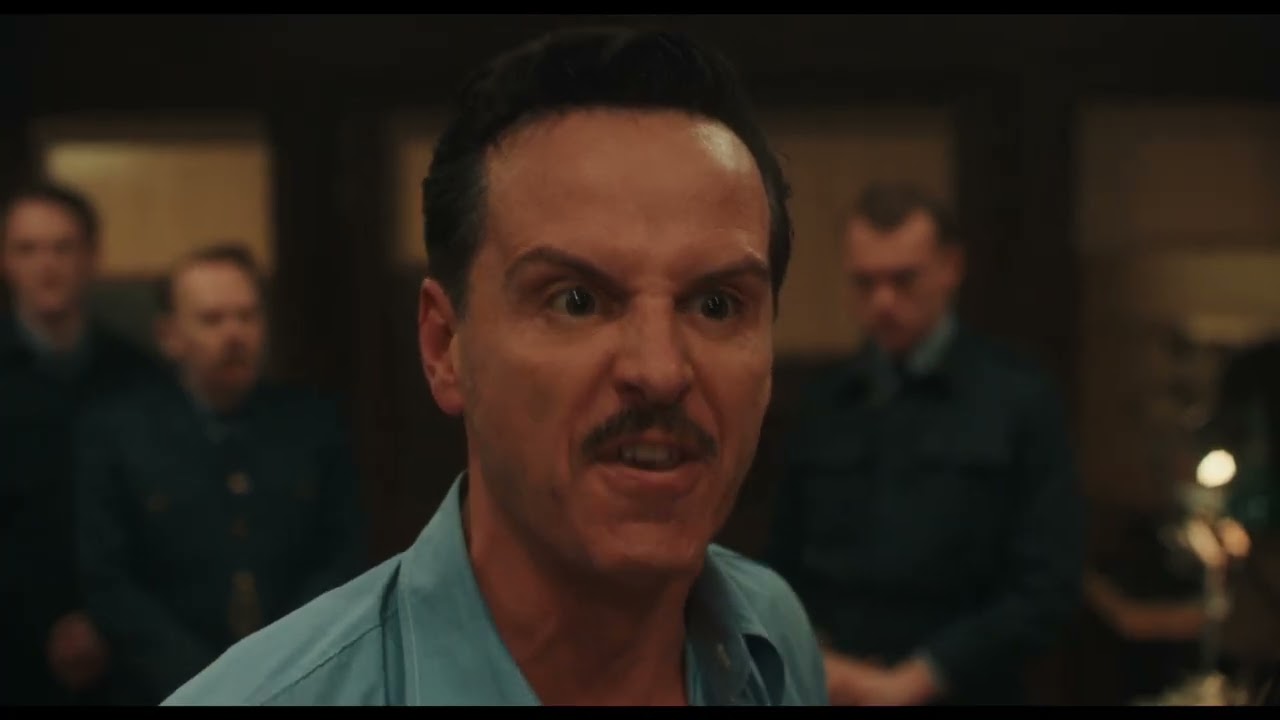
Andrew Scott plays Stagg as a man crushed beneath the responsibility of the moment.
Recommended directly by Winston Churchill, the specialist knows exactly what is at stake.
When Stagg tells Eisenhower, “I’ll do my best,” the response is brutal.
“I don’t want your best, I want certainty,” Eisenhower tells him.
The commander is already carrying the trauma of Operation Tiger, the disastrous D-Day rehearsal two months earlier that cost more than 700 lives.
The pressure on Stagg is therefore impossible to ignore.
The film’s title suddenly becomes more than a reference to the atmosphere outside.
It describes the weight pressing down on everyone inside Eisenhower’s headquarters.

Andrew Scott And Brendan Fraser Lead The Tension
Scott gives the film its emotional centre, portraying Stagg as blunt, intense and increasingly aware that an incorrect forecast could have devastating consequences.
Brendan Fraser plays Eisenhower, bringing an equally commanding presence to the role.
His performance builds toward a stirring pre-battle speech that underlines the scale of what the Allied forces are preparing to attempt.
The two are surrounded by a strong supporting cast.
Kerry Condon brings warmth to the role of Eisenhower’s secretary, Kay Summersby, while Damian Lewis makes an impression as British General Bernard Montgomery.
Lewis’ Montgomery is bullish and eager for the invasion to proceed, regardless of the increasingly worrying conditions outside.
That creates another layer of conflict.
Stagg is trying to understand what the weather will do.
Others are already thinking about what happens if they wait.
Somehow, The Weather Becomes The Battlefield

Much of Pressure unfolds away from the battlefield.
There are maps, research, arguments and increasingly tense discussions inside smoke-filled rooms.
Stagg repeatedly clashes with Irving Krick, played by Chris Messina, an American meteorologist who places greater faith in historical climate data and believes the storm will eventually clear.
Their disagreement becomes central to the film’s suspense.
One forecast could mean the invasion goes ahead.
Another could mean thousands of soldiers are sent into conditions that could make the operation impossible.
The film occasionally falls into a repetitive rhythm as Stagg, Krick and Eisenhower debate the same approaching storm from different perspectives.
Yet the tension remains remarkably effective because the audience knows what the characters cannot escape from:
they are trying to predict the future with lives hanging on the answer.
The Unsung Men Behind D-Day

That is ultimately what gives Pressure its appeal.
Rather than returning to the familiar images of soldiers storming the beaches, the film focuses on the strategists and specialists whose decisions helped make the invasion possible.
It turns something as ordinary as a weather forecast into a matter of extraordinary consequence.
And with Andrew Scott carrying the emotional weight of Stagg, Brendan Fraser commanding the screen as Eisenhower and Damian Lewis adding another forceful presence, the result is a war drama built less around explosions than unbearable anticipation.
Pressure arrives in UK cinemas on September 9.
And its most unsettling idea may be the simplest one: before history was made on the beaches of Normandy, someone first had to decide whether the sky would allow it.