Prime Video Is Reimagining One Of Horror’s Most Famous Stories — And Carrie’s Nightmare Looks Even Crueler In The Social Media Age

Nearly 50 years after Sissy Spacek’s blood-soaked prom night became one of horror cinema’s most unforgettable images, Carrie White is heading back to high school.
But high school looks very different in 2026.
Prime Video has unveiled the full trailer for its new eight-part Carrie series, with horror filmmaker Mike Flanagan taking Stephen King’s famous story into an era of smartphones, social media and humiliation that can spread far beyond the people standing in a school corridor.
The series arrives October 7, with all eight episodes released at once — and the first footage suggests this won’t simply be a longer recreation of Brian De Palma’s 1976 classic.
Carrie White Has A New Kind Of Bully To Fear
The foundations of King’s story remain recognizable.
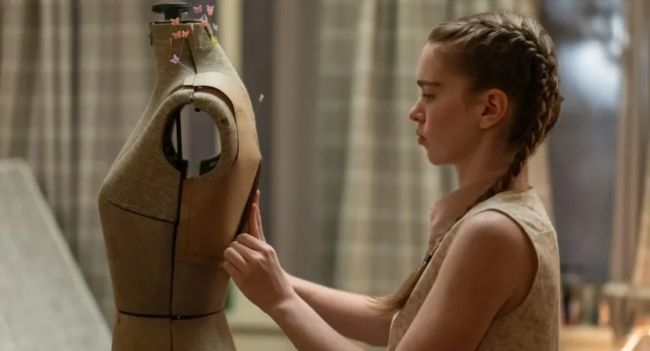
Carrie White, played by Summer H. Howell, has grown up largely isolated from the outside world under the control of her fiercely protective mother, Margaret.
Following her father’s sudden death, Carrie is thrust into public high school and immediately struggles to fit into an environment she barely understands.
Her classmates quickly identify her as an outsider.
But Flanagan’s modern setting changes the scale of what they can do to her.
The cruelty doesn’t necessarily end when Carrie leaves school.
Smartphones allow embarrassing moments to be recorded. Social media allows them to be shared. Humiliation that might once have been witnessed by a handful of teenagers can suddenly find an audience far beyond the room where it happened.
The trailer shows Carrie’s classmates watching and recording her, searching for vulnerabilities they can exploit.
For a teenager already isolated from the world, there may no longer be anywhere to escape.
Mike Flanagan Is Taking On A Horror Classic

Few modern horror filmmakers are more closely associated with emotionally driven supernatural stories than Mike Flanagan.
The filmmaker behind The Haunting of Hill House and Midnight Mass serves as writer and executive producer on the new adaptation and has directed four of its eight episodes.
Stephen King is also an executive producer.
Summer H. Howell landed the title role after more than 1,000 actors reportedly auditioned to play Carrie.
Samantha Sloyan plays Carrie’s mother Margaret White, while Siena Agudong appears as Sue Snell, Alison Thornton as Chris Hargensen, Joel Oulette as Tommy Ross, Josie Totah as Tina and Arthur Conti as Billy.
The ensemble also includes Thalia Dudek as Emaline, Amber Midthunder as Miss Desjardin and Matthew Lillard as Principal Grayle.
With eight episodes available to tell the story, those characters will have considerably more room to develop than they did within a feature-length film.
The 1976 Movie Set An Enormous Benchmark

Flanagan isn’t working without expectations.
Brian De Palma’s 1976 Carrie remains one of the most celebrated adaptations of King’s work.
Sissy Spacek starred as Carrie opposite Piper Laurie as Margaret, with a cast that also included Amy Irving, William Katt and John Travolta.
Almost five decades later, the movie still holds an impressive 94% Tomatometer score on Rotten Tomatoes from 82 critic reviews.
Its reputation has become inseparable from the infamous prom sequence, where the cruelty directed at Carrie reaches a horrifying breaking point and the telekinetic abilities she has struggled to understand are unleashed.
The film tells its story in just one hour and 38 minutes.
Flanagan now has eight episodes.
That additional time could significantly change how audiences experience Carrie’s descent towards that devastating night.
This Version Doesn’t Have To Rush Towards Prom
One of the most intriguing elements of the trailer is how much space the new adaptation appears willing to give Carrie’s life outside the story’s most famous moments.
Viewers already familiar with Carrie know where the cruelty at school is ultimately heading.
But an eight-part television series can spend far longer exploring how Carrie reaches that point.
The trailer offers glimpses of her discovering and experimenting with her telekinetic abilities as the pressure around her continues to build.
There also appear to be scenes extending beyond some of the events most closely associated with the familiar story.
That doesn’t necessarily mean Flanagan is abandoning King’s basic structure.
Instead, the series can examine the accumulation of smaller decisions that eventually produce something catastrophic.
Prime Video’s description frames the story around those choices and the devastating night towards which they are heading, while raising another unsettling issue: whether Carrie should ultimately be understood as a hero, a monster or something far more complicated.
Smartphones Make An Old Story Uncomfortably Current
Perhaps the most significant update doesn’t involve Carrie’s supernatural powers at all.
It’s the phone in everybody else’s hand.
King’s story already dealt with isolation, adolescence, religious extremism and the consequences of sustained bullying.
None of those ideas require much updating.
The mechanics of bullying, however, have transformed.
In the original film, a humiliating incident could become gossip around school.
In this version, it can become content.
A video can be replayed.
A photograph can be circulated.
A cruel post can remain accessible long after the person targeted has gone home.
The trailer appears to understand how terrifying that possibility could be for someone like Carrie — a teenager entering public school with little understanding of the social world surrounding her.
Her classmates aren’t merely able to torment her.
They can potentially preserve that torment and distribute it.
Carrie’s Powers Are Still Growing
Beneath the contemporary changes remains the supernatural element at the heart of the story.
Carrie discovers that she possesses telekinetic abilities.
As her emotional isolation intensifies, those abilities become increasingly significant — and potentially dangerous.
That creates the collision that has always powered King’s story.
Carrie is being pushed towards breaking point at precisely the same time she is discovering that she possesses extraordinary power.
The longer format gives Flanagan an opportunity to spend more time on that discovery rather than treating the abilities simply as a mechanism for the story’s eventual explosion.
And it could make the question of Carrie’s responsibility considerably more complicated.
The First Television Adaptation Of King’s Novel
Despite the story’s long history on screen, the Prime Video production marks the first time Carrie has been adapted as a television series.
That alone allows it to approach the material differently from its cinematic predecessors.
Eight episodes provide room for Carrie’s classmates, teachers, family life and powers to exist beyond the limited perspective possible in a 98-minute movie.
But the series will also face an unavoidable challenge.
De Palma’s version has survived for almost half a century precisely because some of its images and sequences became iconic.
Simply reproducing them would invite immediate comparison.
The new trailer instead suggests Flanagan is trying to preserve the emotional core of King’s story while asking how Carrie’s experience might change if she were a teenager today.
Carrie’s Nightmare Can Now Follow Her Home
That may ultimately be the most disturbing idea behind this version.
Carrie has always been a story about a teenager who cannot find somewhere she feels safe.
At school, she faces cruelty from her classmates.
At home, she lives under Margaret’s intense control.
Now there is another layer.
The people tormenting her can potentially reach her through a screen even after she has escaped the school building.
And they are doing so while Carrie is slowly discovering that she p